|
|
|
|
Original Article
Farmers’ Need for Climate Services and Information for Agricultural Decision-Making in North-central Namibia
|
Cecil
Togarepi 1, Radi A. Tarawneh 2, Moammar Dayoub 3,
Rauna Nekongo 1,
Joel Muzanima 1,
Susanna Shivolo-Useb 1,
Khaled Al-Najjar 4* 1 Department of Animal
Production, Agribusiness and Economics, University of Namibia, Ogongo Campus,
Private Bag X5507, Oshakati, Namibia 2 Department of Economics, Faculty of
Agriculture, Jerash University, 26150 Jerash, Jordan 3 Department of Computing, Faculty of Technology,
Turku University, 20014 Turku, Finland 4 Department of Animal Wealth, Arab Center for the Studies of Arid Zones
and Dry Lands,2440 Damascus, Syria |
|
|
|
ABSTRACT |
||
|
This study aims to identify farmers' needs for climate and agricultural information, assess effectiveness of its delivery channels, and explore role of technology and mobile applications in improving access to climate services and enhancing agricultural adaptation. This is achieved through collection and analysis of quantitative and qualitative data from selected villages in Oshana and Omosati. Results show that majority of farmers in Oshana and Omosati are women (55.5%), and most have a secondary education or higher. Their ages range from young to middle-aged. They face significant challenges, including limited financing (51.7%), high production costs (29.1%), poor weather forecasting (75.5%), and prevalence of crop diseases (79.5%). They struggle to use mobile phones due to cost, weak network coverage, and a lack of training. Farmers need information on soil preparation (87%), fertilizers (81.5%), pesticide application (78.8%), resource management, and crop selection. They request comprehensive weather and climate data, with regional variations in some indicators. They primarily use radio (84.2%) and neighbours (67.8%) for information, while reliance on mobile phones (41.8%), computers (14.4%), and television (28.1%) is increasing. The study concludes that farmers need diverse climate services and information and communication technology tools, but they lack appropriate devices. They rely on soil and climate information to determine timing of land preparation, planting, fertilization, and pesticide management, and they often access this information via smartphones. It recommends educating farmers and providing them with timely and appropriate climate information, disseminating rainfall forecasts using accessible technologies, and supporting policies to enhance effectiveness of agricultural extension services. Keywords: Farm Technologies, Farmer
Requirements, Climate Data, Information. |
||
INTRODUCTION
Namibia is a
semi-arid country characterized by extreme climatic variability and high
environmental fragility, making it vulnerable to droughts, floods, and other
extreme weather events that directly impact agricultural productivity and rural
livelihoods Kaundjua
et al. (2012), Awala et
al. (2019), Amandaria
et al. (2025). These challenges are amplified in the
northern regions, which experience the highest rainfall and population density,
further straining agricultural ecosystems Ofoegbu
and New (2021a). Climate change contributes to increased
frequency and intensity of climate-related risks, reduced crop yields, and
deteriorating health and nutritional conditions, highlighting need to
strengthen farmers' resilience to these changes Montle
and Teweldemedhin (2014), Keja‑Kaereho and Tjizu (2019).
Reference studies
in arid environments show a growing interest in developing more sustainable
agricultural practices and enhancing agricultural sector's resilience to
climate change. Tarawneh
et al. (2025a) emphasize importance of bioeconomics in
promoting sustainability through renewable resources and international
cooperation. Abu Harb et al. (2024a) point to need for education and awareness to
support inclusive agricultural practices that are resilient to climate change.
Studies by Delfani
et al. (2024), Al-Lataifeh et
al. (2024), Dayoub
et al. (2024) and Tarawneh
et al. (2025b) highlight the growing role of smart
technologies in improving the environmental and economic performance of the
livestock sector. Research by Tarawneh
et al. (2022) and Tarawneh
and Al‑Najjar (2023) demonstrates the importance of agricultural
extension and financial support in promoting water resource sustainability and
empowering smallholder farmers. In context of food security, Abo Znemah et al. (2023) point to the factors influencing food income
and expenditure and their role in building resilience. Besides Al-Barakeh et al. (2024), who highlight the
potential of local livestock in achieving sustainable rural development. The
findings of Abu Harb et al. (2024b) support the adoption of technology as a
means to improve economic efficiency. This is in line with the growing research
trend that focuses on integrating technology, developing agricultural
knowledge, and enhancing resilience to climate change. This contributes to
shaping practical research directions that address current agricultural and
environmental challenges.
The problem
addressed by this study is the limited access of smallholder farmers in Namibia
to accurate and up-to-date climate information for making agricultural
decisions Cruz et al. (2021), Ofoegbu
and New (2021b). While farmers rely on traditional
adaptation mechanisms, the severity of current climate change and increasing
climate uncertainty exceeds the capacity of these mechanisms to respond
effectively Reid et al. (2008). Furthermore, weak agricultural extension
services, resource scarcity, the vast geographical area under cultivation, and
the emergence of new pests all contribute to reducing the effectiveness of
climate and agricultural information channels for farmers.
The importance of
this study lies in crucial role of climate information in improving
agricultural decision-making, particularly in fragile and semi-arid
environments. The literature emphasizes need to enhance access to climate
services through both formal and informal channels, as providing reliable and
timely climate information contributes to better agricultural risk management,
supports adaptation to changing conditions, and reduces the vulnerability of
rural livelihoods Vincent
et al. (2017), Tall et al. (2013), Tall et al. (2014), Tall et al. (2018), Hansen
et al. (2019). This role is further amplified by the increasing use of information
and communication technologies, which offer new opportunities for disseminating
and accessing climate data, thus supporting farmers' efforts to address
escalating climate risks Mapiye
et al. (2023).
The gap lies in
lack of systematic studies that focus on assessing actual needs of Namibian
farmers for climate services, identifying type of information required,
adequacy of existing delivery channels, and their receptiveness to modern
technological tools such as mobile applications Hewitt
et al. (2011), Brasseur
and Gallardo (2016). Furthermore, effectiveness of these tools
in addressing shortcomings of traditional extension systems and their potential
impact on promoting agricultural adaptation and improving decision-making
processes among smallholder farmers are not adequately examined.
Based on this
problem, the study aims to identify farmers' needs for climate and agricultural
information. It also seeks to support agricultural decision-making.
Furthermore, it assesses the effectiveness of formal and informal information
delivery channels and their ability to meet the needs of smallholder farmers.
In addition, the study explores the role of agricultural technology and mobile
applications in improving access to and dissemination of climate services. It
also estimates the demand for digital climate services and analyzes their
potential to enhance agricultural adaptation. Finally, it evaluates their role
in mitigating climate risks in semi-arid regions. Consequently, the study
contributes to a deeper scientific understanding of climate service development
in Namibia. This supports agricultural sustainability and enhances farmers'
capacity to respond effectively to increasing climate challenges.
MATERIALS AND METHODS
1)
Study
area
The study was
conducted in selected villages in two districts of north-central Namibia:
Oshana and Omusati. This region is home to the Owambo ethnic group, which
constitutes majority, representing 40% of Namibia's population Angula
and Kaundjua (2016). In Oshana district, the study was conducted
in three villages within the Ongwideva ward: Onamutai, Omatandu, and Okandji.
The population of the Onisi ward in Omusati district was estimated at 13,149,
distributed across three villages: Omaineni, Omakova, and Ibalila. The total
population of Omusati was 243,166, while the population of the wider Onisi ward
was approximately 34,065, comprising 7,717 households Namibia
Statistics Agency. (2014).
2)
Study
design and Sampling
A mixed research
design was used, collecting both quantitative and qualitative data using
open-ended and closed-ended questions to understand farmers' climate service
needs. A multi-stage sampling approach was employed to intentionally select the
Omosati and Oshana districts as case study sites. One constituency was then
selected from each district, and two villages from the Ongwedeva constituency,
along with the villages of Ibalila and Omaineni, were chosen. A simple random
sampling method was used to select approximately 20 households from each of the
selected villages. In the Ongwedeva constituency, 79 farmers were randomly
selected, with an equal number from each of the selected villages, for a total
of 146 respondents. The Cochrane formula was used to determine an appropriate
sample size that accurately represented the population. The sample size
estimation equation was applied at a confidence level of 90%, assuming
homogeneity of selected sites, using the formula (n₀ = (Z²pq)/e²), where
value of (Z=1.645) was adopted, and (p=q=0.5) was adopted due to lack of a
prior estimate of ratio.
3)
Data
collection and analysis
A survey was
conducted to determine farmers' need for climate, weather, and agricultural
information to make decisions regarding the production of major crops such as
millet, maize, cowpeas, and sorghum. A questionnaire with open-ended and
closed-ended questions was used to collect data. Data were gathered through a
pre-designed questionnaire administered via face-to-face interviews with
farmers. Descriptive statistics were used to summarize the data, employing
measures of variance, central tendency, and the chi-square test. The analysis
was performed using SPSS (2025).
RESULTS
Socioeconomic
characteristics of the respondents
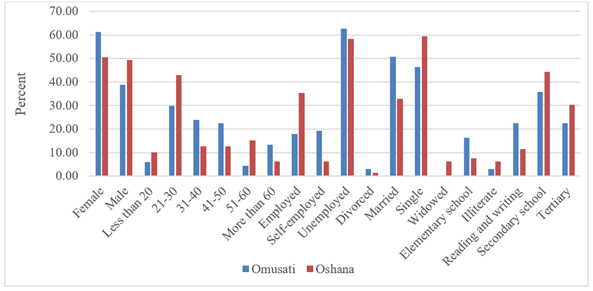
Figure 1 summarizes the demographic, social, and
economic characteristics of survey participants from selected villages in
Omosati and Oshana. The results indicate increased female participation in
agriculture. Most participants have at least a secondary education, and a
significant proportion hold university degrees. Age groups range from young to
elderly, with the majority being early to middle-aged. Marital status varies,
with a higher proportion of single participants. Employment status is
categorized as employed, self-employed, and unemployed, highlighting the
diversity of economic circumstances.
|
Figure 1 |
|
Figure 1 Distribution of Sociodemographic Characteristics
Across Regions |
Challenges faced in carrying out agricultural activities
Farmers report
facing a variety of challenges, most notably limited access to finance and
capital, particularly in Oshana Table 1. Other common difficulties, such as high
input costs, lack of weather forecasting information, crop diseases, and
inadequate agricultural extension services, affect farming activities across
different regions. The findings suggest that farmers face broadly similar
constraints regardless of their location.
Table 1
|
Table 1 Challenges Faced by
Respondents in Carrying Out Agricultural Activities |
|||||
|
Challenges
faced in agricultural activities |
Response |
Omusati
region |
Oshana
region |
Total |
Chi-Square
Value |
|
Obtain inputs (seeds,
fertilisers, pesticides, etc.) |
No |
12(17.4) |
12(14.6) |
24(15.9) |
0.21 |
|
Yes |
57(82.6) |
70(85.4) |
127(84.1) |
||
|
Weather forecasting to
start the planting season or timely activities |
No |
13(18.8) |
23(28.0) |
36(23.8) |
2.82 |
|
Yes |
55(79.7) |
59(72.0) |
114(75.5) |
||
|
High production costs |
No |
46(66.7) |
61(74.4) |
107(70.9) |
1.08 |
|
Yes |
23(33.3) |
21(25.6) |
44(29.1) |
||
|
Lack of market
information |
No |
49(71.0) |
50(61.0) |
99(65.6) |
3.23 |
|
Yes |
19(27.5) |
32(39.0) |
51(33.8) |
||
|
lack of finance and
capital (No access to credit) |
No |
40(58.0) |
32(39.0) |
72(47.7) |
7.03** |
|
Yes |
28(40.6) |
50(61.0) |
78(51.7) |
||
|
Crop diseases |
No |
12(17.4) |
16(19.5) |
28(18.5) |
0.62 |
|
Yes |
55(79.7) |
65(79.3) |
120(79.5) |
||
|
lack of extension
services |
No |
21(30.4) |
29(35.4) |
50(33.1) |
2.68 |
|
Yes |
46(66.7) |
53(64.6) |
99(65.6) |
||
|
Chi-square value with no
star means p>0.05, **p<0.01, and the percentages are placed in
parentheses. |
|||||
Challenges associated with ICT (mobile) usage in agricultural activities
Table 2 shows the main barriers faced by farmers in
the Omosati and Oshana regions when adopting mobile phone technology for
agricultural decision-making. The financial costs of phones and data are the
most significant obstacles, while electricity supply issues, weak communication
networks, and a lack of training are substantial limitations on technology use.
In contrast, barriers related to technical knowledge and language do not vary
significantly between regions, suggesting that the main constraints stem more from
economic and infrastructural factors than from farmers' knowledge and skills.
Table 2
|
Table 2 Barriers to Mobile
Technology Adoption in Agricultural Decision-Making: Insights from Namibian
Farmers |
|||||
|
Challenges
associated with mobile use in agricultural activities |
Characteristic |
Omusati
region |
Oshana
region |
Total |
Chi-Square
Value |
|
Price of smart mobile
phone |
No |
16(23.2) |
24(29.3) |
40(26.5) |
0.71 |
|
|
Yes |
53(76.8) |
58(70.7) |
111(73.5) |
|
|
Cost of data |
No |
28(40.6) |
42(51.2) |
70(73.5) |
1.71 |
|
|
Yes |
41(59.4) |
40(48.8) |
81(53.6) |
|
|
Electricity supply |
No |
21(30.4) |
54(65.9) |
75(49.7) |
18.80*** |
|
|
Yes |
48(69.6) |
28(34.1) |
76(50.3) |
|
|
Inadequate technical
knowhow |
No |
48(69.6) |
57(69.5) |
105(69.5) |
0.01 |
|
|
Yes |
21(30.4) |
25(30.5) |
46(30.5) |
|
|
High cost of acquiring
and maintenance |
No |
69(69.6) |
65(79.3) |
113(74.8) |
2.7 |
|
|
Yes |
20(29.0) |
17(20.7) |
37(24.5) |
|
|
Language barrier |
No |
56(81.2) |
68(82.9) |
124(82.1) |
1.05 |
|
|
Yes |
13(18.8) |
13(15.9) |
26(17.2) |
|
|
Telecommunications
network problems |
No |
29(42.0) |
52(63.4) |
81(53.6) |
8.42** |
|
|
Yes |
40(58.0) |
30(36.6) |
70(46.3) |
|
|
Lack of training on
mobile phone |
No |
65(58.0) |
65(79.3) |
130(86.1) |
7.13** |
|
|
Yes |
4(5.8) |
17(20.7) |
21(13.9) |
|
|
Prefer use of
radio/television broadcasting for agricultural information |
No |
58(84.1) |
58(70.7) |
116(76.8) |
3.74* |
|
|
Yes |
11(15.9) |
24(29.3) |
35(23.2) |
|
|
Other |
No |
66(95.7) |
82(100.0) |
148(98.0) |
3.64* |
|
Yes |
3(4.3) |
0(0.0) |
3(2.0) |
||
|
Chi-square value with no
star means p>0.05, *p<0.05, **p<0.01, ***p<0.001, and the
percentage are placed in parentheses. |
|||||
Climate services information required by farmers to support agricultural decision-making
Although not
statistically significant, most participants sought information on soil
preparation timing, fertilizer application rates, and pesticide timing Table 3. The primary needs for climate services were
for resource allocation related to labor, finance, and pesticide application
timing. Farmers identified several reasons for requesting weather information,
including soil preparation, weed control, crop selection, irrigation
management, and resource allocation. Many farmers rely on manual methods and
local knowledge to assess soil moisture and sometimes consult their neighbors
for advice on fertilizer use. This information is crucial for cost management
and efficient irrigation, making soil moisture data vital for making daily
decisions in agricultural activities.
Table 3
|
Table 3 Types of Agricultural-Related
Information Needed by Farmers for Agricultural Decision-Making |
|||||
|
Variable |
Characteristic |
Omusati
region |
Oshana
region |
Total |
Chi-Square
Value |
|
Timing of preparation
for the soil |
Yes |
57(85.1) |
70(88.6) |
127(87.0) |
0.4 |
|
|
No |
10(14.9) |
9(11.4) |
19(13.0) |
|
|
Timing of weeding |
Yes |
37(55.2) |
36(45.6) |
73(50.0) |
1.35 |
|
|
No |
30(44.8) |
43(54.4) |
73(50.0) |
|
|
Choosing of crops/crop
variety (depend on season dry/wet) |
Yes |
42(62.7) |
51(64.6) |
93(63.7) |
0.06 |
|
|
No |
25(37.3) |
28(35.4) |
53(36.3) |
|
|
Irrigation management
in terms of timing of irrigation and quantity of water to be applied |
Yes |
24(35.8) |
22(27.8) |
46(31.5) |
1.07 |
|
|
No |
43(64.2) |
57(72.2) |
100(68.5) |
|
|
Resource use
allocation both labour and finances] |
Yes |
14(20.9) |
27(34.2) |
41(28.1) |
3.17* |
|
|
No |
53(79.1) |
52(65.8) |
105(71.9) |
|
|
Fertiliser application
the quantity and type of fertiliser as well as the timing of application of
fertilisers on crops |
Yes |
52(77.6) |
67(84.8) |
119(81.5) |
1.25 |
|
|
No |
15(22.4) |
12(15.2) |
27(18.5) |
|
|
Timing of pesticide
application |
Yes |
46(68.7) |
69(87.3) |
115(78.8) |
7.57*** |
|
No |
21(31.3) |
10(12.7) |
31(21.2) |
||
|
Chi-square value with no
star means p>0.05, *p<0.05, ***p<0.001, and the percentage are
placed in parentheses. |
|||||
Table 4 shows that farmers in the Omosati and Oshana
regions have a high demand for various types of climate information to support
agricultural decision-making. This includes weather forecasts, rainfall data,
temperature readings, and predictions related to climate change and flooding.
These findings highlight the importance of providing accurate and comprehensive
climate information to facilitate agricultural planning and climate-risk-based
decision-making.
Table 4
|
Table 4 Types of
Climate-Related Information Demanded by Farmers to Support Agricultural
Decision-Making |
|||||
|
Variable |
Characteristic |
Omusati
region |
Oshana
region |
Total |
Chi-Square
Value |
|
Weather forecasting |
No |
2(3.0) |
8(10.1) |
10(6.8) |
2.89* |
|
|
Yes |
65(97.0) |
71(89.9) |
136(93.2) |
|
|
Soil temperature at
different depths |
No |
18(26.9) |
17(21.5) |
35(24.0) |
0.56 |
|
|
Yes |
49(73.1) |
62(78.5) |
111(76.0) |
|
|
Rainfall |
No |
9(13.4 |
4(5.1) |
13(8.9) |
3.13* |
|
|
Yes |
58(86.6) |
75(94.9) |
133(91.1) |
|
|
Climate change
projections |
No |
2(3.0) |
2(2.5) |
4(2.7) |
0.03 |
|
|
Yes |
65(97.0) |
77(97.5) |
142(97.3) |
|
|
Flood projections |
No |
3(4.5) |
1(1.3) |
4(2.7) |
1.4 |
|
|
Yes |
64(95.5) |
78(98.7) |
142(97.3) |
|
|
Temperature
projections |
No |
2(3.0) |
1(1.3) |
3(2.1) |
0.53 |
|
Yes |
65(97.0) |
78(98.7) |
143(97.9) |
||
|
Chi-square value with no
star means p>0.05, *p<0.05, and the percentage are placed in
parentheses. |
|||||
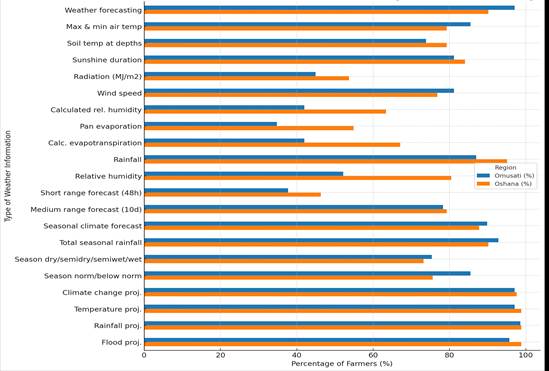
Figure 2 illustrates regional differences in farmers'
needs for specific weather information. Therefore, general weather forecasts
are recommended. Statistically significant differences were found between
Omosati and Oshana regions regarding the importance of temperature, soil
temperature, radiation, humidity, evaporation, and precipitation. Other weather
parameters, including different types of forecasts and projections, did not
show any statistically significant regional differences.
|
Figure 2 |
|
|
|
Figure 2 Comparison of Weather-Related Information
Needs for Agricultural Decision-Making in Omusati and Oshana Regions, Namibia |
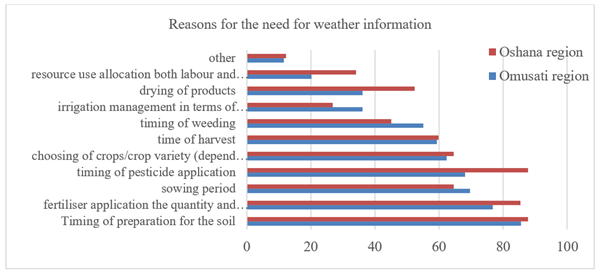
Figure 3 illustrates why farmers need weather
information, considering the global importance of soil preparation. Resource
allocation and the timing of pesticide application showed significant regional
variations. Other factors, such as sowing and irrigation, also vary, but not as
drastically.
|
Figure 3 |
|
|
|
Figure 3 Reasons Farmers Need Weather Related
Information |
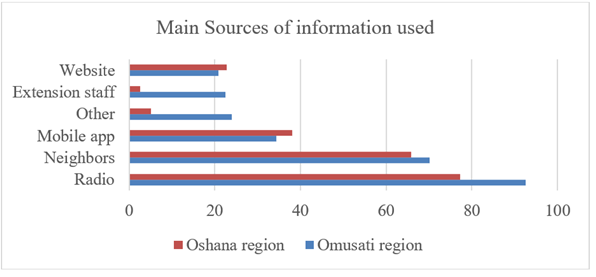
The results in Figure 4 show that the majority of respondents
received their weather and climate information via radio, totaling 84.2%. An
additional 67.8% of participants reported receiving weather information from
their neighbors. Only a small percentage received information from extension
workers.
|
Figure 4 |
|
|
|
Figure 4 Farmers’ Main Sources of Climate Related
Information |
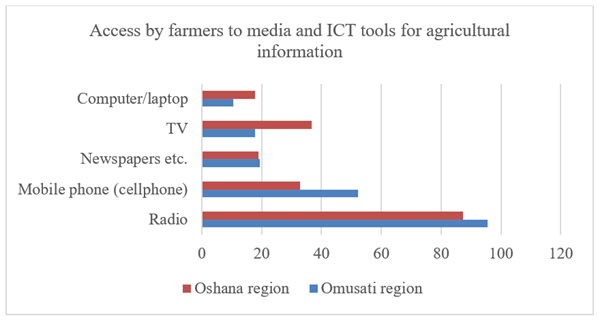
Radio broadcasting
remains a central channel for agricultural information in Namibia, as shown in Figure 4 However, this dominance faces clear
challenges, as illustrated in Figure 5 The weak telecommunications infrastructure
highlights the need for effective alternatives, and the accuracy of information
gathered from farmers raises several concerns. Consequently, participants are
now turning to mobile phones and the internet, with a significant increase in
computer usage, indicating a strategic shift towards more diverse information
sources.
|
Figure 5 |
|
|
|
Figure 5 Access to Media and ICT Tools for
Agricultural Information |
DISCUSSIONS
Demographic,
social and economic characteristics
The demographic
and socioeconomic characteristics of the respondents revealed gender dynamics,
education levels, and employment status in Omusati and Oshana. Women
outnumbered men, highlighting their central role in agriculture and rural
livelihoods. This is consistent with broader findings on women's contributions
to agriculture and food production under climate variability. Education
influences access to agricultural and climate information, with most
respondents having at least a secondary education. Employment opportunities
varied, with a significant proportion unemployed. Gumucio
et al. (2020) underscore the roles of gender in accessing
resources and making climate-related decisions, reinforcing the need for
gender-sensitive climate services. Vo et al. (2023) emphasized the importance of considering
sociodemographic differences to avoid bias, while Fel et al. (2022) highlighted the links between demographics, dietary patterns, and
social support needs.
Production challenges and need for institutional support
Farmers in both
regions face significant challenges, with limited access to finance being the
most pressing, particularly in Oshana. High input costs, unreliable weather
forecasting, crop diseases, and inadequate agricultural extension services also
hinder productivity. These widespread problems highlight the need for improved
financial support, climate information, and agricultural extension services. Nyarko
and Kozári (2021) emphasize the importance of incentives, ICT
integration, and stronger extension services for achieving agricultural
sustainability Rahman
and Huq (2023), Anteneh
and Melak (2024).
Obstacles to adoption of information and communication technologies
The adoption of
information and communication technologies (ICTs) in the agricultural sector
faces significant regional challenges. These include weak infrastructure, low
mobile phone literacy, and continued preference for traditional media such as
radio. The high cost of smartphones and data services is a major barrier to
adoption, highlighting the need for policies that promote affordability. Krell et
al. (2021) indicate that mobile services have promising
potential to support agricultural development, but their use remains limited
due to high costs and weak farmers' networks. Quandt
et al. (2020) link mobile phone use to improved maize
productivity in Tanzania. Kabirigi
et al. (2023) demonstrate that usage patterns vary
according to farm type, education level, and age group.
Farmers' priorities and information gaps
Farmers prioritize
practical climate services information. They focus on soil preparation,
fertilizer use, and pest control. However, resource management and the timing
of pesticide application have a greater impact on climate services utilization.
Farmers rely on manual soil moisture assessment and consult neighbors for
fertilizer advice. This reflects gaps in access to reliable scientific data and
local guidance. Sutanto
et al. (2022) emphasize the role of soil moisture in
improving irrigation and weed control at a reasonable cost. Zhai et al. (2020) highlight the challenges in agricultural
decision support systems. Borrero and Mariscal (2022) focus on the importance
of governance and collaboration in digital platforms. Ara et al. (2021) advocate for participatory design to promote
the adoption of decision support services.
Demand for and access to climate information
Over 90% of
farmers seek climate-related information. This reflects their concern about
increasing droughts, rising extreme temperatures, and erratic rainfall patterns
in Namibia Spear
and Chappel (2018), Keja‑Kaereho and Tjizu (2019); Van and Biradar (2021). Despite the availability of data, several
barriers hinder its use. These include format, language, and accessibility.
This aligns with Ncoyini
et al. (2022), who emphasize the importance of tailoring
climate information to the needs of end users. Myeni et
al. (2024) highlight the need for accessible climate
services to enhance resilience. Ritu and Kaur
(2024) underscore the role of attitudes, benefits, and support systems
in adoption. Hasan
and Kumar (2019) and Kumar et
al. (2020) advocate for participatory approaches to
improve decision-making.
Regional variations and importance of dedicated data
Regional
variations in weather information reflect local agricultural practices. General
forecasts are evaluated on a global scale. However, temperature, soil
temperature, radiation, humidity, evaporation, and rainfall show clear regional
differences between Omosati and Ochana. This finding highlights the need for
climate services tailored to each region. Yegbemey
et al. (2023) and Yegbemey and Egah (2020) confirm that
appropriate weather data improves agricultural decisions. Mabhaudhi
et al. (2025) also emphasize the role of such data in
supporting climate-smart agriculture. Yegbemey
et al. (2023) report that SMS-based rainfall forecasting
in Benin increases productivity and reduces costs.
Demand drivers and influence of local context
The reasons
farmers seek weather information reflect both global and regional needs. Soil
preparation is critical globally, but resource allocation and the timing of
pesticide application vary by region and are influenced by local practices and
pest pressures. Differences in the importance of sowing and irrigation were not
statistically significant. Kumar et
al. (2021) noted that trust and context influence the
use of hydro-climatic information. Ncoyini
et al. (2022) attribute weak participation to training
gaps and language barriers. Foguesatto
et al. (2020) highlight that extreme weather events,
rather than data, shape farmers' perceptions of climate.
Communication channels between traditional and digital
Farmers primarily
rely on traditional channels for weather information. Radio is the main source,
followed by information sharing among neighbors. Formal agricultural extension
services play a limited role. This situation highlights a clear gap in the dissemination
of official information. Popoola
et al. (2020) emphasize the effectiveness of media
compared to extension services. Paparrizos
et al. (2023) highlight the role of farmer support
applications in building trust through shared climate services. Rust et al. (2022) emphasize the increasing influence of social
media and farmer networks in knowledge sharing.
Infrastructure and E-Readiness
Limited ICT
infrastructure hinders farmers' access to agricultural information. Radio
dominates communication channels, while newer technologies are gaining
popularity. Weak networks limit mobile phone usage, despite the increasing
reliance on computers and mobile devices. Balancing traditional and digital
channels remains crucial for effective information dissemination. Mansour
et al. (2024) notes that ICT provides market and technical
knowledge, although barriers related to literacy, costs, and awareness persist.
Assessing e-readiness using frameworks such as the Network Readiness Index can
promote digital integration and support agricultural sustainability.
The gap in ownership and use of technological tools
Access to
information and communication technologies (ICTs) is crucial for climate
adaptation, yet many farmers face barriers, such as limited access to mobile
phones, computers, and radios Vaughan
and Dessai (2014), Vincent
et al. (2017). These limitations affect farmers' ability
to access climate services. The study indicates that farmers with limited
resources have limited access to media, although some use smartphones to access
climate information. Of the 133 participants, 91% use mobile phones, but only
60% own them, highlighting a mobile phone ownership gap Asa and Uwem (2017). The researchers demonstrate that mobile
phones are effective in providing agricultural information in Nigeria,
suggesting the need to strengthen mobile extension services Duncombe
et al. (2016).
Implications for policies, research, and practices
The findings
indicate the need for policy support in disseminating climate, weather, and
agricultural information, along with appropriate digital support to bridge the
digital divide. This access accelerates decision-making and reduces the time
and cost required for sound agricultural decisions. Research is needed to
determine farmers' willingness to accept and pay for climate services, and the
factors influencing this willingness. It is needed to identify barriers to
providing climate services to farmers, enabling the design of effective policy
interventions. In practice, farmers should be clear about their needs, advocate
for them, and organize themselves to reduce transaction costs and increase
their bargaining power. The exchange of climate and agricultural information
must be tailored to farmers' needs. It must also be easily understandable,
interpretable, and usable for agricultural decision-making and planning. This
approach strengthens farmers' resilience and empowers them to make informed and
timely decisions.
CONCLUSIONS and RECOMMENDATIONS
It can be
concluded that farmers need a variety of climate services, including
information and communication technology (ICT) tools and diverse climate
information, and the results show that they are aware of the existence of these
services. However, they lack access to appropriate ICT tools, such as
televisions and computers. Therefore, the government should develop programs to
provide ICT facilities to farmers to enhance food security in the country.
Farmers place
great importance on soil moisture and climate information to help them make
decisions related to their farms. This information can be used to determine the
timing of land preparation, seed planting, fertilizer application, weeding, and
pesticide application. Farmers can easily access climate information through
devices such as smartphones. Extension services can also organize field days,
distribute brochures, and make information available through physical or
digital methods.
Some farmers have
a limited understanding of weather information or are not well aware of it.
Therefore, agricultural extension services recommend educating farmers about
weather information and climate services. The study also recommends that
extension staff provide farmers with appropriate and timely climate knowledge
and information to use in reducing climate-related losses and maximizing
benefits, such as protecting lives and livelihoods.
Farmers want
access to short- and long-term rainfall forecasts. Therefore, disseminating
this information requires the use of appropriate and accessible technologies
that enable people to obtain climate information and agricultural services.
This must be coupled with appropriate policy interventions and strategies to
enhance the effectiveness of agricultural extension services.
ACKNOWLEDGMENTS
The researchers
extend their sincere thanks to University of Namibia, University of Jerash,
University of Turku, and General Commission for Agricultural Scientific
Research in Syria for their scientific and technical support. They express
their gratitude to the farmers and participants in north-central Namibia for
their cooperation in providing study data.
REFERENCES
Abo Znemah, S., Tarawneh, R., Shnaigat, S., and Al‑Najjar, K. (2023). Estimating some Indicators of Food Security for Rural Households. Asian Journal of Agriculture and Food Sciences, 11(1). https://doi.org/10.24203/ajafs.v11i2.7171
Abu Harb, S., Dayoub, M., and Al‑Najjar, K. (2024b). The Impact of Agricultural Extension Program Effectiveness on Sustainable Farming: A Survey Article. International Journal of Agricultural Technology, 20(2), 477–492.
Abu Harb, S., Tarawneh, R. A., Abu Hantash, K. L. A., Altarawneh, M., Al‑Najjar, K., and Daxue Xuebao, H. (2024a). Empowering Rural Youth Through Sustainable Innovation, Entrepreneurship and Peer Learning in Agriculture. Journal of Hunan University Natural Sciences.
Al‑Barakeh, F., Khashroum, A. O., Tarawneh, R. A., Al‑Lataifeh, F. A., Al‑Yacoub, A. N., Dayoub, M., and Al‑Najjar, K. (2024). Sustainable Sheep and Goat Farming in Arid Regions of Jordan. Ruminants, 4(2), 241–255. https://doi.org/10.3390/ruminants4020017
Al‑Lataifeh, F. A., Tarawneh, R. A., Dayoub, M., Sutinen, E., and Al‑Najjar, K. (2024). Smart Technologies for Livestock Sustainability and Overcoming Challenges: A Review. Ebraheem S. Al‑Taha’at. https://doi.org/10.5281/zenodo.13744058
Amandaria, R., Darma, R., Zain, M. M., Fudjaja, L., Wahda, M. A., Kamarulzaman, N. H., Bakheet Ali, H., and Akzar, R. (2025). Sustainable resilience in Flood‑Prone Rice Farming: Adaptive Strategies and Risk‑Sharing Around Tempe Lake, Indonesia. Sustainability, 17(6). https://doi.org/10.3390/su17062456
Angula, M. N., and Kaundjua, M. B. (2016). The Changing Climate and Human Vulnerability in North‑Central Namibia. Jamba: Journal of Disaster Risk Studies, 8(2), 1–7. https://doi.org/10.4102/jamba.v8i2.200
Anteneh, A., and Melak, A. (2024). Ict‑Based Agricultural Extension and Advisory Service in Ethiopia: A Review. Cogent Food & Agriculture, 10(1). https://doi.org/10.1080/23311932.2024.2391121
Ara, I., Turner, L., Harrison, M. T., Monjardino, M., deVoil, P., and Rodriguez, D. (2021). Application, Adoption and Opportunities for Improving Decision Support Systems in Irrigated Agriculture: A Review. Agricultural Water Management, 257. https://doi.org/10.1016/j.agwat.2021.107161
Asa, U. A., and Uwem, C. A. (2017). Utilization of Mobile Phones for Agricultural Purposes by Farmers in Itu Area, Nigeria. European Scientific Journal, 13(19), 395. https://doi.org/10.19044/esj.2017.v13n19p395
Awala, S. K., Hove, K., Wanga, M. A., Valombola, J. S., and Mwandemele, O. D. (2019). Rainfall Trend and Variability in Semi‑Arid Northern Namibia: Implications for Smallholder Agricultural Production. WIJAS, 1.
Borrero, J. D., and Mariscal, J. (2022). A Case Study of a Digital Data Platform for the Agricultural Sector: A Valuable Decision Support System for small farmers. Agriculture, 12(6). https://doi.org/10.3390/agriculture12060767
Brasseur, G. P., and Gallardo, L. (2016). Climate Services: Lessons Learned and Future Prospects. Earth’s Future, 4(3), 79–89. https://doi.org/10.1002/2015EF000338
Cruz, G., Gravina, V., Baethgen, W. E., and Taddei, R. (2021). A Typology of Climate Information users for Adaptation to Agricultural Droughts in Uruguay. Climate Services, 22. https://doi.org/10.1016/j.cliser.2021.100214
Dayoub, M., Shnaigat, S., Tarawneh, R. A., Al‑Yacoub, A. N., Al‑Barakeh, F., and Al‑Najjar, K. (2024). Enhancing Animal Production Through Smart Agriculture: Possibilities, Hurdles, Resolutions, and Advantages. Ruminants, 4(1), 22–46. https://doi.org/10.3390/ruminants4010003
Delfani, P., Thuraga, V., Banerjee, B., and Chawade, A. (2024). Integrative Approaches in Modern Agriculture: IoT, ML and AI for Disease Forecasting Amidst Climate Change. Precision Agriculture. https://doi.org/10.1007/s11119-024-10164-7
Duncombe, R. (2016). Mobile Phones for Agricultural and Rural Development: A Literature Review and Suggestions for Future Research. European Journal of Development Research, 28(2), 213–235. https://doi.org/10.1057/EJDR.2014.60
Fel, S., Jurek, K., and Lenart‑Kłoś, K. (2022). Relationship between Socio‑Demographic Factors and Post‑Traumatic Stress Disorder: A Cross‑Sectional Study Among Civilian Participants in Hostilities in Ukraine. International Journal of Environmental Research and Public Health, 19(5). https://doi.org/10.3390/ijerph19052720
Foguesatto, C. R., Artuzo, F. D., Talamini, E., and Machado, J. A. D. (2020). Understanding the Divergences Between Farmers’ Perception and Meteorological Records Regarding Climate Change: A Review. Environment, Development and Sustainability, 22(1), 1–16. https://doi.org/10.1007/s10668-018-0193-0
Gumucio, T., Hansen, J., Huyer, S., and van Huysen, T. (2020). Gender‑responsive Rural Climate Services: A Review of the Literature. Climate and Development, 12(3), 241–254. https://doi.org/10.1080/17565529.2019.1613216
Hansen, J. W., Vaughan, C., Kagabo, D. M., Dinku, T., Carr, E. R., Körner, J., and Zougmoré, R. B. (2019). Climate Services Can Support African Farmers’ Context‑Specific Adaptation Needs at Scale. Frontiers in Sustainable Food Systems, 3, 21. https://doi.org/10.3389/fsufs.2019.00021
Hasan, M. K., and Kumar, L. (2019). Comparison between Meteorological Data and Farmer Perceptions of Climate Change and Vulnerability in Relation to Adaptation. Journal of Environmental Management, 237, 54–62. https://doi.org/10.1016/j.jenvman.2019.02.028
Hewitt, C., Mason, S., and Walland, D. (2011). The Global Framework for Climate Services. http://go.nature.com/OrPV1W
IBM Corp. (2025). IBM SPSS Statistics (Version 25). IBM Corporation. https://www.ibm.com/products/spss-statistics
Kabirigi, M., Sekabira, H., Sun, Z., and Hermans, F. (2023). The use of Mobile Phones and the Heterogeneity of Banana Farmers in Rwanda. Environment, Development and Sustainability, 25(6), 5315–5335. https://doi.org/10.1007/s10668-022-02268-9
Kaundjua, M. B., Angula, M. N., and Angombe, S. T. (2012). Community Perceptions of Climate Change and Variability Impacts in Oshana and Ohangwena Regions.
Keja‑Kaereho, C., and Tjizu, B. R. (2019). Climate Change and Global Warming in Namibia: Environmental Disasters vs. Human Life and the Economy. Management and Economics Research Journal, 5(1), 1. https://doi.org/10.18639/MERJ.2019.836535
Krell, N. T., Giroux, S. A., Guido, Z., Hannah, C., Lopus, S. E., Caylor, K. K., and Evans, T. P. (2021). Smallholder Farmers’ use of Mobile Phone Services in Central Kenya. Climate and Development, 13(3), 215–227. https://doi.org/10.1080/17565529.2020.1748847
Kumar, U., Werners, S. E., Paparrizos, S., Datta, D. K., and Ludwig, F. (2021). Co‑Producing Climate Information Services with Smallholder Farmers in the Lower Bengal Delta: How Forecast Visualization and Communication Support Farmers’ Decision‑making. Climate Risk Management, 33. https://doi.org/10.1016/j.crm.2021.100346
Kumar, U., Werners, S., Roy, S., Ashraf, S., Hoang, L. P., Datta, D. K., and Ludwig, F. (2020). Role of Information in Farmers’ Response to Weather and Water‑Related Stresses in the Lower Bengal Delta, Bangladesh. Sustainability, 12(16). https://doi.org/10.3390/su12166598
Mabhaudhi, T., Dirwai, T. L., Taguta, C., Senzanje, A., Abera, W., Govid, A., Dossou‑Yovo, E. R., Aynekulu, E., and Petrova Chimonyo, V. G. (2025). Linking Weather and Climate Information Services (WCIS) to Climate‑smart Agriculture (CSA) Practices. Climate Services, 37, 100529. https://doi.org/10.1016/j.cliser.2024.100529
Mansour, E. (2024). Information and Communication Technologies’ (ICTs) Use Among Farmers in Qena Governorate of Upper Egypt. Library Hi Tech, 42(4), 1266–1285. https://doi.org/10.1108/LHT-11-2021-0422/FULL/XML
Mapiye, O., Makombe, G., Molotsi, A., Dzama, K., and Mapiye, C. (2023). Information and Communication Technologies (ICTs): The Potential for Enhancing the Dissemination of Agricultural Information and Services to Smallholder Farmers in Sub‑Saharan Africa. Information Development, 39(3), 638–658. https://doi.org/10.1177/02666669211064847
Montle, B. P., and Teweldemedhin, M. Y. (2014). Assessment of Farmers’ Perceptions and the Economic Impact of Climate Change in Namibia: Case Study on Small‑Scale Irrigation Farmers (SSIFs) of Ndonga Linena Irrigation Project. Journal of Development and Agricultural Economics, 6(11), 443–454. https://doi.org/10.5897/jdae2014.0596
Myeni, L., Mahleba, N., Mazibuko, S., Moeletsi, M. E., Ayisi, K., and Tsubo, M. (2024). Accessibility and Utilization of Climate Information Services for Decision‑Making in Smallholder Farming: Insights from Limpopo Province, South Africa. Environmental Development, 51. https://doi.org/10.1016/j.envdev.2024.101020
Namibia Statistics Agency. (2014). Population and Housing Census: Kharas Region Profile. https://nsa.org.na/document-category/
Ncoyini, Z., Savage, M. J., and Strydom, S. (2022). Limited Access and use of Climate Information by Small‑Scale Sugarcane Farmers in South Africa: A Case Study. Climate Services, 26. https://doi.org/10.1016/j.cliser.2022.100285
Nyarko, D. A., and Kozári, J. (2021). Information and Communication Technologies (ICTs) Usage Among Agricultural Extension Officers and its Impact on Extension Delivery in Ghana. Journal of the Saudi Society of Agricultural Sciences, 20(3), 164–172. https://doi.org/10.1016/j.jssas.2021.01.002
Ofoegbu, C., and New, M. (2021a). Collaboration Relations in Climate Information Production and Dissemination to Subsistence Farmers in Namibia. Environmental Management, 67(1), 133–145. https://doi.org/10.1007/s00267-020-01383-5
Ofoegbu, C., and New, M. (2021b). The Role of Farmers and Organizational Networks in Climate Information Communication: The Case of Ghana. International Journal of Climate Change Strategies and Management, 13(1), 19–34. https://doi.org/10.1108/IJCCSM-04-2020-0030
Paparrizos, S., Dogbey, R. K., Sutanto, S. J., Gbangou, T., Kranjac‑Berisavljevic, G., Gandaa, B. Z., Ludwig, F., and van Slobbe, E. (2023). Hydro‑Climate Information Services for Smallholder Farmers: FarmerSupport app Principles, Implementation, and Evaluation. Climate Services, 30, 100387. https://doi.org/10.1016/j.cliser.2023.100387
Popoola, O. O., Yusuf, S. F. G., and Monde, N. (2020). Information Sources and Constraints to Climate Change Adaptation Amongst Smallholder Farmers in Amathole District Municipality, Eastern Cape Province, South Africa. Sustainability, 12(14). https://doi.org/10.3390/su12145846
Quandt, A., Salerno, J. D., Neff, J. C., Baird, T. D., Herrick, J. E., McCabe, J. T., Xu, E., and Hartter, J. (2020). Mobile Phone Use is Associated with Higher Smallholder Agricultural Productivity in Tanzania, East Africa. PLoS ONE, 15(8). https://doi.org/10.1371/journal.pone.0237337
Rahman, M. M., and Huq, H. (2023). Implications of ICT for the Livelihoods Of Women Farmers: A Study in the Teesta River Basin, Bangladesh. Sustainability, 15(19). https://doi.org/10.3390/su151914432
Reid, H., Sahlén, L., Stage, J., and Macgregor, J. (2008). Climate Change Impacts on Namibia’s Natural Resources and Economy. Climate Policy, 8(5), 452–466. https://doi.org/10.1080/14693062.2008.9685709
Ritu, R. K., and Kaur, A. (2024). Unveiling Indian Farmers’ Adoption of Climate Information Services for Informed Decision‑Making: A Path to Agricultural Resilience. Climate and Development. https://doi.org/10.1080/17565529.2024.2409774
Rust, N. A., Stankovics, P., Jarvis, R. M., Morris‑Trainor, Z., de Vries, J. R., Ingram, J., Mills, J., Glikman, J. A., Parkinson, J., Toth, Z., Hansda, R., McMorran, R., Glass, J., and Reed, M. S. (2022). Have farmers had enough of experts? *Environmental Management, 69(1), 31–44. https://doi.org/10.1007/s00267-021-01546-y
Spear, D., and Chappel, A. (2018). Livelihoods on the Edge Without a Safety net: The Case of Smallholder Crop Farming in North‑Central Namibia. Land, 7(3). https://doi.org/10.3390/land7030079
Sutanto, S. J., Paparrizos, S., Kranjac‑Berisavljevic, G., Jamaldeen, B. M., Issahaku, A. K., Gandaa, B. Z., Supit, I., and van Slobbe, E. (2022). The Role of Soil Moisture Information in Developing Robust Climate Services for Smallholder Farmers: Evidence from Ghana. Agronomy, 12(2). https://doi.org/10.3390/agronomy12020541
Tall, A., Coulibaly, J. Y., and Dayoub, M. (2018). Do Climate Services Make a Difference? A Review of Evaluation Methodologies and Practices to Assess the value of Climate Information Services for Farmers: Implications for Africa. Climate Services, 11, 1–12. https://doi.org/10.1016/j.cliser.2018.06.001
Tall, A., Hansen, J., Jay, A., Campbell, B., Kinyangi, J., Aggarwal, P. K., and Zougmoré, R. (2014). Scaling up Climate Services for Farmers: Mission Possible.
Tall, A., Jay, A., and Hansen, J. (2013). Scaling Up Climate Services for Farmers in Africa and South Asia: Workshop Report, December 10–12, 2012, Saly, Senegal.
Tarawneh, R. A., Abu Harb, S., Dayoub, M., and Al‑Najjar, K. (2025a). Leveraging the Bio‑Economy to Drive Sustainable Development: A Comprehensive Review. International Journal of Agricultural Technology, 21(1), 327–338.
Tarawneh, R. A., Al‑Absi, K., Tarawneh, M. S., Al‑Mufti, M. O., and Al‑Najjar, K. (2025b). Policy and Demographic Determinants Influencing Agricultural Technology Adoption in Jordan. International Journal of Applied Science and Engineering Review, 6(6), 1–19. https://ijaser.org
Tarawneh, R. A., and Al‑Najjar, K. (2023). Assessing the Impacts of Agricultural Loans on Agricultural Sustainability in Jordan. IOSR Journal of Economics and Finance, 14, 49–56. https://doi.org/10.9790/5933-1406014956
Tarawneh, R., Tarawneh, M. S., and Al‑Najjar, K. A. (2022). Agricultural Policies Among Advisory and Cooperative Indicators in Jordan. International Journal of Research – Granthaalayah, 10*(2), 10–17. https://doi.org/10.29121/granthaalayah.v10.i2.2022.4489
Van Ginkel, M., and Biradar, C. (2021). Drought Early Warning in Agri‑Food Systems. Climate, 9(9). https://doi.org/10.3390/cli9090134
Vaughan, C., and Dessai, S. (2014). Climate Services for Society: Origins, Institutional Arrangements, and Design Elements for an Evaluation Framework. Wiley Interdisciplinary Reviews: Climate Change, 5(5), 587–603. https://doi.org/10.1002/wcc.290
Vincent, K., Dougill, A. J., Dixon, J. L., Stringer, L. C., and Cull, T. (2017). Identifying Climate Services Needs for National Planning: Insights from Malawi. Climate Policy, 17(2), 189–202. https://doi.org/10.1080/14693062.2015.1075374
Vo, C. Q., Samuelsen, P. J., Sommerseth, H. L., Wisløff, T., Wilsgaard, T., and Eggen, A. E. (2023). Comparing the Sociodemographic Characteristics of Participants and Non‑Participants in the Population‑Based Tromsø Study. BMC Public Health, 23(1). https://doi.org/10.1186/s12889-023-15928-w
Yegbemey, R. N., Bensch, G., and Vance, C. (2023). Weather Information and Agricultural Outcomes: Evidence from a Pilot Field Experiment in Benin. World Development, 167, 106178. https://doi.org/10.1016/j.worlddev.2022.106178
Yegbemey, R. N., and Egah, J. (2021). Reaching out to Smallholder Farmers in Developing Countries with Climate Services: A Literature Review of Current Information Delivery Channels. Climate Services, 23, 100253. https://doi.org/10.1016/j.cliser.2021.100253
Zhai, Z., Martínez, J. F., Beltran, V., and Martínez, N. L. (2020). Decision Support Systems for Agriculture 4.0: Survey and Challenges. Computers and Electronics in Agriculture, 170. https://doi.org/10.1016/j.compag.2020.105256
|
|
 This work is licensed under a: Creative Commons Attribution 4.0 International License
© JISSI 2026. All Rights Reserved.